Best Total Knee Replacement in Ranchi
Freedom from knee pain.
Walk with confidence again.
A clear cost estimate upfront and lasting relief from chronic knee pain and arthritis — so patients across Ranchi and Jharkhand get world-class joint surgery without travelling to Delhi or Kolkata.
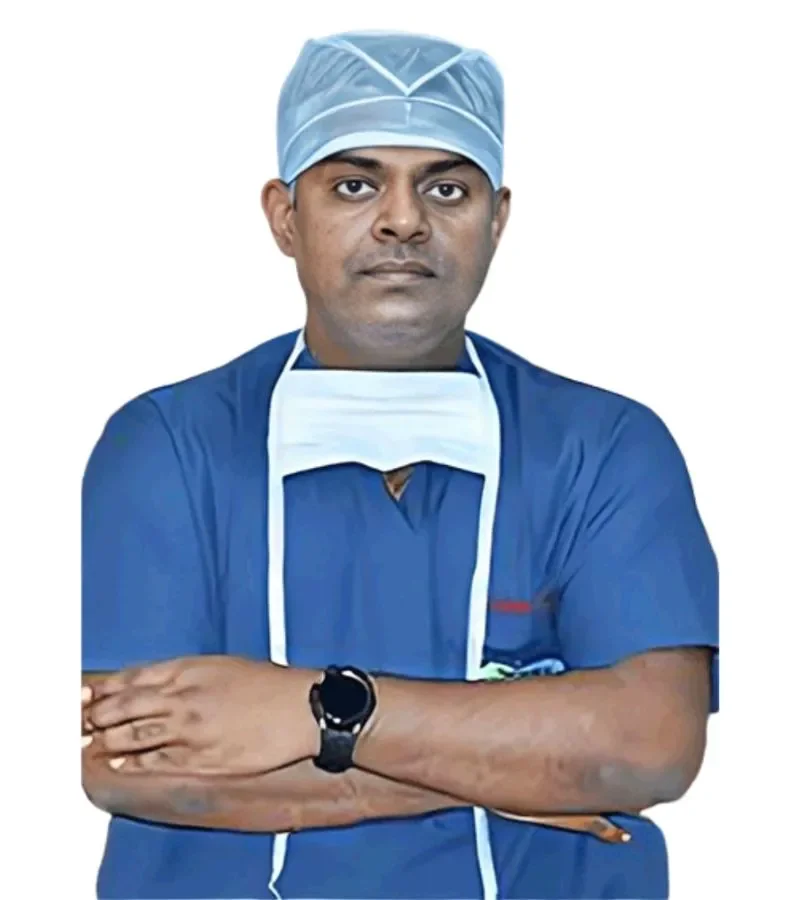
Fellowship in Joint Replacement, Arthroscopy & Spine Surgery (Germany)
MBBS Gold Medalist | Internationally Trained
Reg. No. 5390 · Jharkhand Medical Council (2017)
+91 92418 91432
Knee replacement — quick answers
Over 90% of patients regain pain-free movement.
What is it?
A surgery that replaces damaged knee joint surfaces with an implant to reduce pain and restore movement.
Who needs it?
Patients with severe knee arthritis whose pain and stiffness no longer improve with medicines or physiotherapy.
Recovery time
Most patients walk within 24–48 hours. Major recovery in 6–12 weeks, with improvement for up to a year.
Cost
Approx. ₹1.5–3 lakh per knee, depending on implant and technique. A clear, itemised package is shared before surgery.
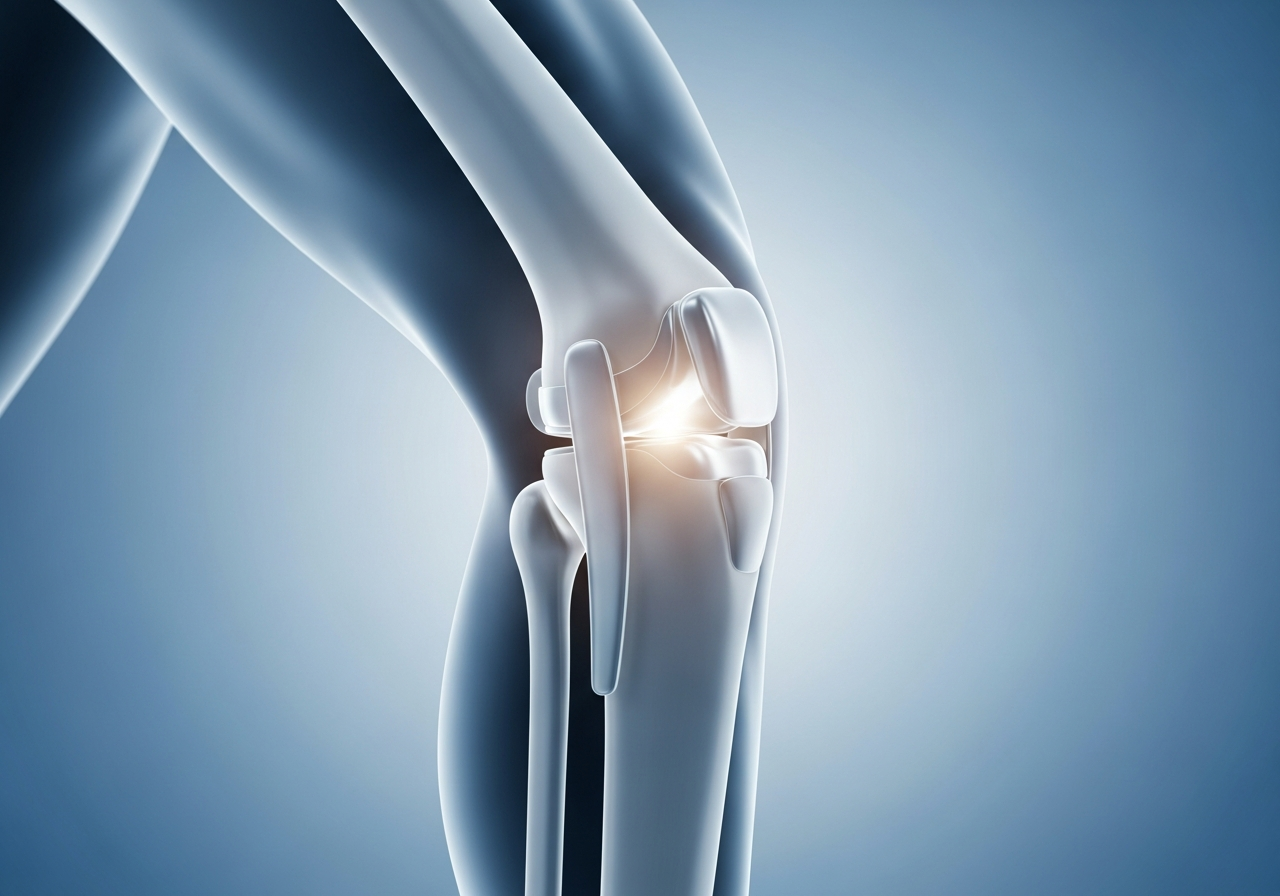
What is total knee replacement?
Modern implants are designed to last 15 to 25 years.
Total knee replacement, also known as knee arthroplasty, is a surgical procedure in which the worn-out surfaces of the knee joint are replaced with artificial implants. It is one of the most commonly performed and successful joint surgeries worldwide, restoring pain-free movement for the great majority of patients with advanced joint damage.
In advanced osteoarthritis, knee pain is not only inflammation — it is mechanical damage: loss of cartilage, joint deformity and bone-on-bone friction. Conditions like rheumatoid arthritis and post-traumatic arthritis can cause similar joint destruction.
The procedure corrects these mechanical problems by resurfacing the damaged bone with prosthetic components made of metal and medical-grade plastic. The goal is not only knee pain relief — it is stable walking, better alignment, and long-term function that can last 15 to 25 years.
Is surgery
right for you?
You may be a candidate if
- Knee pain limits daily activities like walking or climbing stairs
- Pain disturbs your sleep regularly
- Stiffness makes sitting or standing difficult
- X-rays show advanced arthritis with bone-on-bone contact
- Medicines, physiotherapy and injections no longer give lasting relief
You may not need surgery yet if
- Pain is occasional and manageable
- Joint damage is mild on imaging
- You still have good walking capacity
- Symptoms improve with non-surgical treatment
A proper clinical evaluation is essential before deciding — and Dr. Saurav will tell you honestly if surgery isn’t needed yet. Age alone is rarely a barrier: many patients in their 70s and 80s return to an active, independent life, because overall fitness matters more than age.
Types of knee replacement surgery
Total Knee Replacement
The entire joint surface is replaced with prosthetic implants — for arthritis affecting most of the knee. Can be done using minimally invasive techniques.
Partial Knee Replacement
Only one compartment is replaced. Suitable for selected patients with localised damage — preserves healthy bone and ligaments.
Bilateral Knee Replacement
Both knees replaced under one anaesthesia (or in stages) — one hospital stay and one recovery instead of two, ideal for fit patients with arthritis in both knees.
Robotic-Assisted Knee Replacement
In selected cases, robotic guidance sharpens implant alignment and bone-cut accuracy. Not every patient needs it — Dr. Saurav advises when it genuinely helps.
Revision Knee Replacement
A second surgery to replace a worn-out or failed implant. More complex than primary surgery and requires specialised expertise.
Minimally Invasive Knee Replacement
Performed through a smaller incision with less tissue disruption — less scarring, reduced pain and a shorter hospital stay.
How the procedure
works, step by step
Pre-surgery evaluation — X-rays, blood tests and medical fitness assessment.
Admission and anaesthesia — general or spinal block, based on your condition.
Surgical procedure — damaged bone and cartilage removed, prosthetic implant placed.
Early mobilization — walking with walker support within 24 to 48 hours.
Physiotherapy — begins for knee bending and strengthening.
Discharge planning — most patients go home within 3 to 5 days.
Home rehabilitation — structured recovery and follow-up physiotherapy.
Every stage is planned to minimise pain, speed recovery and reduce complications like infection or blood clots.
Recovery after your surgery
Pain control. Wound care. Basic walking. Knee-bending exercises.
Improved mobility. Reduced swelling. Increased walking distance.
Strength recovery. Stair climbing. Better balance.
Major functional improvement in daily activities.
Continued strength and endurance gains.
Recovery speed depends on physiotherapy after knee replacement and overall health. Consistent rehabilitation is the key to a successful outcome.
Risks and complications
Total knee replacement is one of the safest and most successful orthopedic surgeries — over 90% of patients experience significant pain relief. Like any major surgery, there are potential risks, all actively minimised:
Infection at the surgical site — minimised with sterile protocols and prophylactic antibiotics.
Blood clots (DVT) — prevented with blood thinners and early mobilization.
Temporary knee stiffness — addressed with structured physiotherapy.
Nerve or blood vessel injury — extremely rare with an experienced surgeon.
Implant loosening over time — modern implants are designed to last 15 to 25 years.
Dr. Ankur Saurav follows international safety protocols, and every patient receives a personalised risk assessment before surgery.
Preparing for your surgery
Careful preparation and strict safety protocols give the best, safest result.
Before your surgery
Before the operation, Dr. Saurav’s team runs a full pre-surgical work-up — X-rays, blood tests and a fitness and anaesthesia assessment — to confirm the diagnosis and make sure you are ready. Long-term conditions such as diabetes, blood pressure or heart disease are optimised first, and you are told clearly which medicines (such as blood thinners) to pause and when to stop eating before admission.
On the day, the procedure, your expected hospital stay and the recovery plan are explained again so you and your family know exactly what to expect — with a transparent, itemised cost estimate shared in advance and no hidden charges.
How your safety is protected
Your surgery is performed in a dedicated, sterile operating theatre with an experienced anaesthesia team and strict infection-control protocols. The knee is aligned precisely and balanced during surgery for a stable, natural feel. Blood-clot (DVT) prevention, careful tissue handling and quality imported implants further reduce risk and protect your result.
Dr. Saurav personally reviews your recovery, and the Medifirst Hospital team stays reachable for any concern after you go home. Serious complications are uncommon — and the honest, careful selection of who truly needs surgery is itself one of the most important safety steps of all.
Knee replacement cost
The cost of your knee replacement varies depending on:
Instead of a single number, you receive a clear package quote with all inclusions and exclusions explained in advance. Most health insurance policies cover knee replacement surgery, with cashless facilities available at Medifirst Hospital, Ranchi.
Why patients choose Dr. Ankur Saurav for knee replacement
As one of Jharkhand's most experienced joint-replacement surgeons, Dr. Saurav pairs international training with honest, personal care.
International Training
Fellowship in joint replacement & arthroscopy, Germany.
Proven Track Record
15,000+ surgeries, 1,000+ joint replacements, 90%+ success.
Precision Care
Careful planning. Alignment focus. Structured rehabilitation.
Personal Care
Direct access to your surgeon. No middlemen.
Transparent Process
Clear communication. No surprise bills.
Cashless Insurance
Cashless health-insurance facility at Medifirst Hospital.
Your questions,
answered.
What is total knee replacement?
Who needs total knee replacement?
How long does recovery take after knee replacement?
What is the cost of knee replacement in Ranchi?
Is robotic knee replacement better?
How long does a knee implant last?
Is knee replacement surgery covered by insurance?
What are the risks of the surgery?
What is revision knee replacement?
When should I decide on knee replacement surgery?
When can I return to work and daily activities after knee replacement?
or WhatsApp your X-ray for an opinion
Dr. Ankur Saurav is a very good and experienced doctor. He listened patiently, explained the problem clearly, and guided us with the right treatment. The behaviour was very polite and caring. We are thankful for the support.
Despaired after my accident, Dr. Ankur Saurav gave me hope and bolstered my confidence to work again like pre-accident.
My nerve problem is cured properly. Very thankful to Dr. Ankur Saurav.
Improvement is very fast through the doctor. Excellent orthopedic care.
Very good doctor. Recovery rate very fast.
Ankur sir is a great doctor. Fully satisfied with the treatment.
Very good doctor. Highly recommended in Ranchi.
Good treatment, thank you so much.
Your journey to pain-free living
starts with one conversation.
You’ll get a clear diagnosis, treatment options, recovery expectations and a transparent cost framework. Visit Dr. Ankur Saurav at Medifirst Hospital, Ranchi — or connect instantly on WhatsApp.
Medifirst Hospital Pvt. Ltd.
SubPlot No.2703/1 and 2703/2, Plot No. 2703, Booty Rd, near Suryodaya Apartment, Vijay Nagar, Bariatu, Ranchi, Jharkhand 834012
Mon – Sat: 10:00 AM – 7:00 PM
Sunday: 10:00 AM – 4:00 PM
★★★★★ 4.9 (226 reviews)
 Visit at Medifirst