Best Fracture & Trauma Surgeon in Ranchi
Broken a bone?
Expert fracture care.
From a simple crack to a complex, multi-fragment break, a broken bone needs the right treatment to heal straight and strong. Dr. Ankur Saurav provides complete trauma and fracture care — from casting to precise surgical fixation with plates, screws, nails and external fixators.
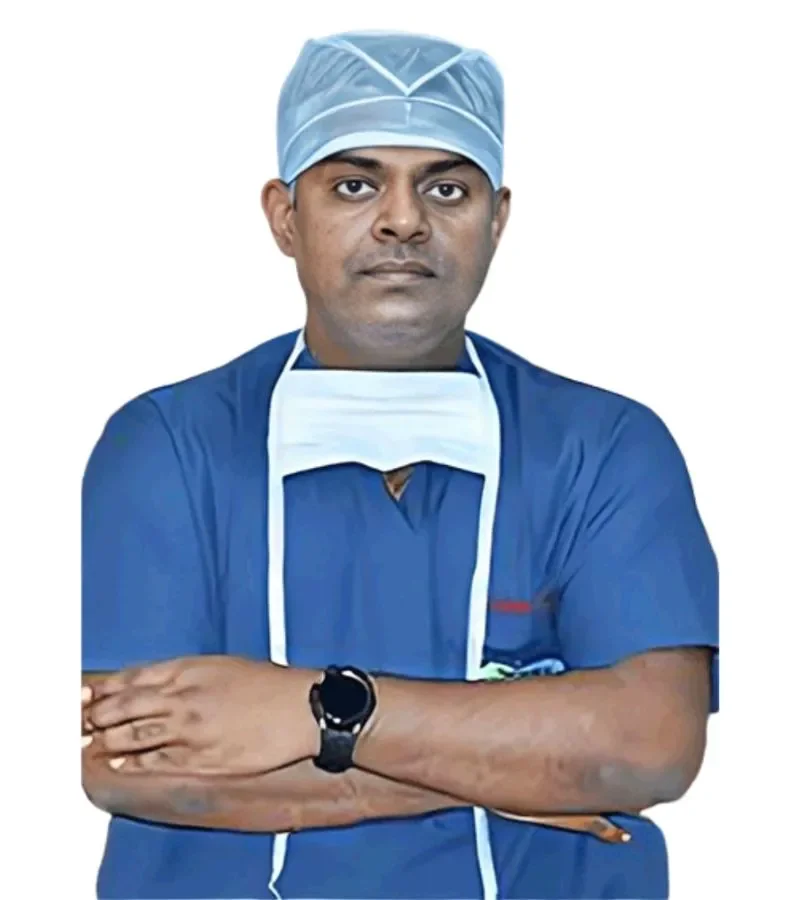
Fellowship in Joint Replacement, Arthroscopy & Spine Surgery (Germany)
MBBS Gold Medalist | Internationally Trained
Reg. No. 5390 · Jharkhand Medical Council
+91 92418 91432
Fracture treatment — quick answers
Most bones heal in 6 to 12 weeks with the right fixation.
What is it?
Trauma & fracture treatment covers the diagnosis and care of broken bones — from a simple hairline crack to a complex, multi-fragment break — so the bone realigns and heals straight and strong.
Types of fracture
These range from stable, hairline cracks to displaced, open (compound) and multi-fragment (comminuted) breaks — the pattern decides the right treatment.
Cast or surgery?
A stable, well-aligned break often heals well in a cast or brace. A displaced, unstable or open one usually needs surgical fixation with plates, screws or a nail.
When it’s an emergency
Severe deformity, an open wound over the break, numbness, a cold or pulseless limb, or inability to bear weight need urgent evaluation — go to the emergency department right away.
What is fracture treatment?
Plating, nailing or external fixation — chosen to hold the bone still.
A fracture is simply a broken bone — the words mean the same thing. It can be a hairline crack that barely shows on an X-ray, or a severe, multi-fragment break where the bone has shattered and shifted out of place. Diagnosis and treatment is the process of confirming exactly what kind of injury has happened, then choosing the care that lets it heal in the correct position, with the bone’s strength and the joint’s movement fully restored.
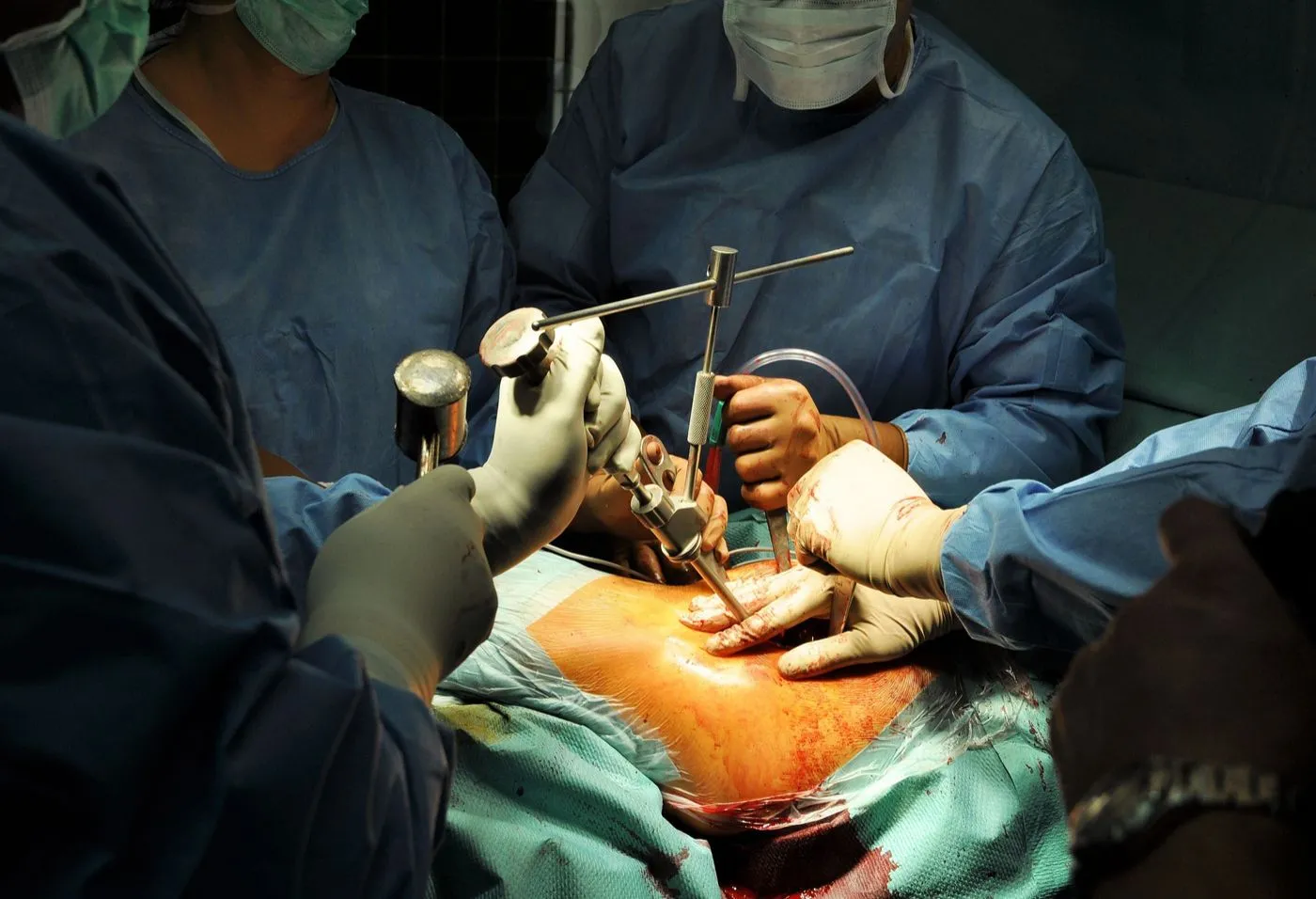
Treatment falls into two broad paths. A stable, well-aligned break is often managed non-surgically — a plaster cast, splint or brace holds the bone still while it heals on its own. A displaced, unstable, open or joint-involving injury usually needs surgical fixation: the bone is carefully realigned (reduction) and held with metal plates and screws, an intramedullary nail passed down the centre of the bone, or — for severe open wounds — a temporary external fixator, until it has healed solidly. Dr. Ankur Saurav examines every case on its own merits and recommends the option — cast or surgery — that gives the best chance of a straight, strong, pain-free recovery.
Healing also changes with age. A child’s growing bone mends faster and often remodels itself, so many childhood breaks are treated without surgery — see pediatric orthopedics for injury care tailored to children. In older adults, a weakened, osteoporotic bone can snap from a minor fall — these fragility fractures, especially of the hip, wrist and spine, are covered under osteoporosis treatment.
Types of fractures treated
Every break is different — treatment is matched to the injury, the bone and the patient.
Simple / Closed Breaks
A single, clean break with the skin intact. Often the most straightforward to treat, with a cast or a comparatively simple fixation depending on the bone and how well it is aligned.
Compound / Open Breaks
The broken bone pierces through the skin. This is a surgical emergency needing urgent wound care, thorough cleaning and stabilisation to prevent infection deep in the bone.
Comminuted Fractures
The bone shatters into three or more fragments. These multi-fragment breaks usually need precise surgical fixation with plates, screws or a nail to rebuild the bone’s alignment.
Hairline / Stress Fractures
A thin crack from repetitive stress or a minor injury, common in the foot, shin and lower leg. Often managed with rest, protection and a brace rather than surgery.
Fragility Fractures
A weakened, osteoporotic bone breaks from a minor fall — most often the hip, wrist or spine in older adults. Most hip breaks need prompt surgery to get patients walking again. Osteoporosis treatment
Children’s Breaks
Growing bones heal faster and differently from adult bones, with special attention to the growth plate. Many childhood breaks are treated without surgery. Pediatric orthopedics
Cast, brace or surgery —
how the choice is made
A cast or brace may be enough when
- The bone is stable and well-aligned
- It is a simple, closed break
- Certain breaks in children, which heal fast and remodel as they grow
- The joint surface itself is not involved
Surgery is needed when
- The break is displaced or unstable
- It is an open (compound) break
- The break involves a joint surface or has multiple fragments
- A broken hip in an older adult, to allow early, safe walking
Every break is examined and X-rayed before a plan is made. Dr. Saurav always recommends the least invasive option that gives your bone the best chance of healing straight and strong, and is equally clear when surgery genuinely gives a better result than a cast.
How treatment
works, step by step
Emergency stabilisation — the injured limb is splinted and pain is controlled the moment you arrive.
X-ray (and CT for complex breaks) — imaging confirms exactly how the bone is broken.
Diagnosis & plan — the pattern of the break decides whether a cast or surgery is the right path.
Reduction — the bone fragments are carefully realigned into their correct position.
Fixation — held in place with a cast, or with plates, screws or a nail during surgery.
Immobilisation & wound care — the limb is protected and any wound is closely monitored.
Early guided mobilisation — safe, supervised movement begins as soon as the bone allows.
Rehabilitation — a physiotherapy plan restores strength, motion and confidence in the limb.
Timelines vary widely by injury — a wrist in a cast may need 4 to 6 weeks; a hip fracture surgery, followed by rehabilitation, is planned to get you walking again as early as safely possible.
Fracture treatment cost
The cost of treatment depends on:
Most health insurance policies, including accident and trauma cover, apply to this treatment, with cashless facility available at Medifirst Hospital, Ranchi.
Preparing for fracture surgery
A broken bone can happen without warning — careful, rapid preparation and strict safety protocols give the best result.
Before surgery
When surgery is needed, Dr. Saurav confirms the pattern of the break with X-rays and, for complex injuries, a CT scan, and checks for any damage to nerves, blood vessels or the skin around the break. Blood tests and a fitness and anaesthesia assessment make sure you are ready for theatre, and, where the injury allows, the timing, medicines to pause and fasting instructions are explained clearly.
The fixation plan — cast, plate and screws, or a nail — and its cost are discussed in advance, along with what to expect during healing and rehabilitation, so there are no surprises at any stage.
How your safety is protected
Surgery is performed in a dedicated, sterile operating theatre with an experienced anaesthesia team and strict infection-control protocols — especially important for open injuries. Careful technique and prompt wound care keep infection risk low, and blood-clot (DVT) prevention protects patients who need to stay still while healing.
Dr. Saurav personally guides your fixation, recovery and rehabilitation, and the Medifirst Hospital team remains reachable for any concern after you go home. Choosing the least invasive treatment that still gives a strong, straight result is treated as the most important safety step of all.
Why patients choose Dr. Ankur Saurav for trauma care
Dr. Saurav pairs German fellowship training with honest, precise care — so patients across Ranchi & Jharkhand get complete trauma and fracture treatment without travelling to Delhi.
Complete Trauma Care
From casting to complex trauma surgery, under one surgeon.
Germany Fellowship
International training in advanced trauma and joint surgery.
All Ages Treated
Injury care for children, adults and older, osteoporotic bone.
Precise Fixation
Careful reduction and fixation with quality plates, screws and nails.
Transparent Costs
A clear, itemised estimate before admission — no hidden charges.
Cashless Insurance
Cashless health-insurance facility at Medifirst Hospital, Ranchi.
Related: Pediatric Orthopedics · Osteoporosis Treatment
Dr. Ankur Saurav is a very good and experienced doctor. He listened patiently, explained the problem clearly, and guided us with the right treatment. The behaviour was very polite and caring. We are thankful for the support.
Despaired after my accident, Dr. Ankur Saurav gave me hope and bolstered my confidence to work again like pre-accident.
My nerve problem is cured properly. Very thankful to Dr. Ankur Saurav.
Improvement is very fast through the doctor. Excellent orthopedic care.
Very good doctor. Recovery rate very fast.
Ankur sir is a great doctor. Fully satisfied with the treatment.
Very good doctor. Highly recommended in Ranchi.
Good treatment, thank you so much.
Fracture & trauma
questions, answered.
What is the difference between a fracture and a break?
Do all fractures need surgery?
When does a fracture need surgery?
How long does a fracture take to heal?
What metal is used to fix fractures, and is it removed?
How soon can I move or bear weight after a fracture?
What is the cost of fracture treatment in Ranchi?
What are the risks or complications of fracture surgery?
or WhatsApp your X-ray for an opinion
Fast, precise fracture care.
The moment a bone breaks.
A prompt X-ray and examination tell you exactly what the break needs — cast or surgery. Visit Dr. Ankur Saurav at Medifirst Hospital, Ranchi — or connect instantly on WhatsApp.
Medifirst Hospital Pvt. Ltd.
SubPlot No.2703/1 and 2703/2, Plot No. 2703, Booty Rd, near Suryodaya Apartment, Vijay Nagar, Bariatu, Ranchi, Jharkhand 834012
Mon – Sat: 10:00 AM – 7:00 PM
Sunday: 10:00 AM – 4:00 PM
★★★★★ 4.9 (226 reviews)
 Visit at Medifirst